
Autonomous Vehicles: Revolutionizing the Automotive Industry

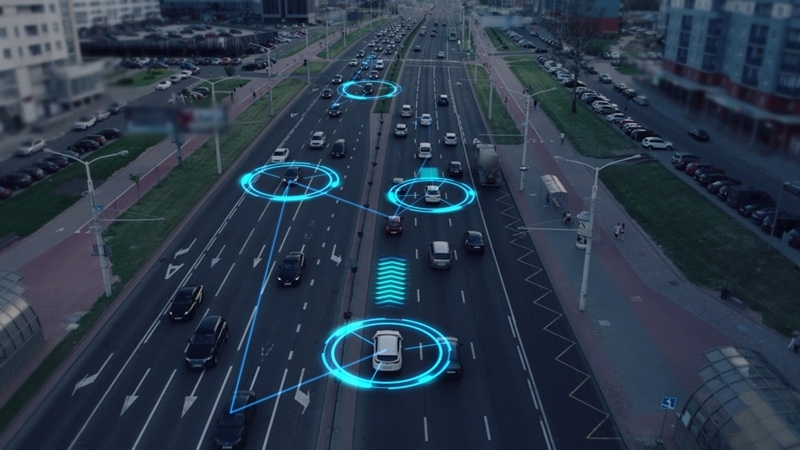
The shift towards autonomous vehicles is no longer something that is to happen in the future; it is an ongoing transformation that is changing the very essence of transportation. This change is not limited to self-driving cars but also includes commercial AI-powered trucks. Safety, logistics, and vehicle ownership are all undergoing changes.
Technology leaps are coupled with the foreseen trends in the automotive industry, which leads to new accomplishments and obstacles for automakers, suppliers, consumers, and government regulations.
In this post, we will focus on the impacts of driverless technology on innovation, politics, economy, and the forecast for the automotive vehicles industry globally.
Self-Driving Cars as Modern Trends in Automotive Industry
The development and deployment of self-driving cars is without a doubt the most popular trend in the automobile industry. Self-driving cars are equipped with sensors, machine learning algorithms, and advanced processors, which allows these vehicles to navigate roads on autopilot with minimal human intervention.
Companies such as Google (starting with Waymo), Tesla, and Apple, in addition to traditional automakers like Ford and GM, are investing heavily in perfecting this revolutionary concept.
Car autonomy is classified into five levels, from Level 0 which is no automation to Level 5 which is full automation. Currently, most commercial automotive vehicles sit between Level 2 and Level 3, where the car provides some driving assistance but human supervision is still required. Nonetheless, Level 4 and 5 automotive vehicles are being actively tested and piloted in selected cities.
Key Shifts Include:
- Shifts in urban transport planning to support autonomous ridesharing.
- The shift in focus of consumers from owning mobility to on-demand services.
- Changes in insurance policies to AI-directed blame liability.
These changes highlight that self-driving cars are not just a means of transport; rather, they signal a radical transformation of an entire industry.
A Closer Look at This: Automotive Trends 2025: What’s Changing in the USA
The Role of AI in Vehicles: Smart, Safe, and Scalable
The most significant driver of the shift towards autonomous vehicles is the integration of AI technology into cars. With the help of artificial intelligence, vehicles are capable of real-time decision-making, comprehending different levels of context, and responding accurately to unfamiliar situations.
Some of the ways AI in vehicles is already transforming the landscape include:
- Instant evaluation of LiDAR, radar, camera, and sensor data.
- Failure-forecasting maintenance activities.
- Aiding vehicle operators through voice recognition.
- Action anticipation of pedestrians and drivers.
To put it simply, AI in vehicles is transforming the conventional approach to transportation into a highly automated ecosystem. This kind of automation shifts the paradigm from merely reducing human error to the complete removal of human intervention. Self-driving cars, for example, have been found to be far safer than their human-operated counterparts in controlled environments.
The Impact of Driverless Technology on Auto Manufacturing
Auto manufacturers are starting to rethink their production pipelines as a result of adopting driverless technology. Autonomous vehicles, for instance, need advanced computing units (hardware) installed as well as perception, decision making, and control integration software, which requires older systems to be remodeled.
Major Shifts in Manufacturing Include:
- Stronger alliances between technology companies and automakers.
- Installation of edge AI computing chips on the assembly line before the vehicle it's completed.
- Higher spending to develop multi-purpose flexible autonomy-capable vehicle frameworks.
Additionally, more advanced forms of autonomous systems will render pedals, mirrors, and steering wheels unnecessary in the future. This is a clear indicator that vehicles will fundamentally change in design which the automotive industry is currently undergoing.
Legal and Ethical Issues Linked to The Use of Self-Driving Cars
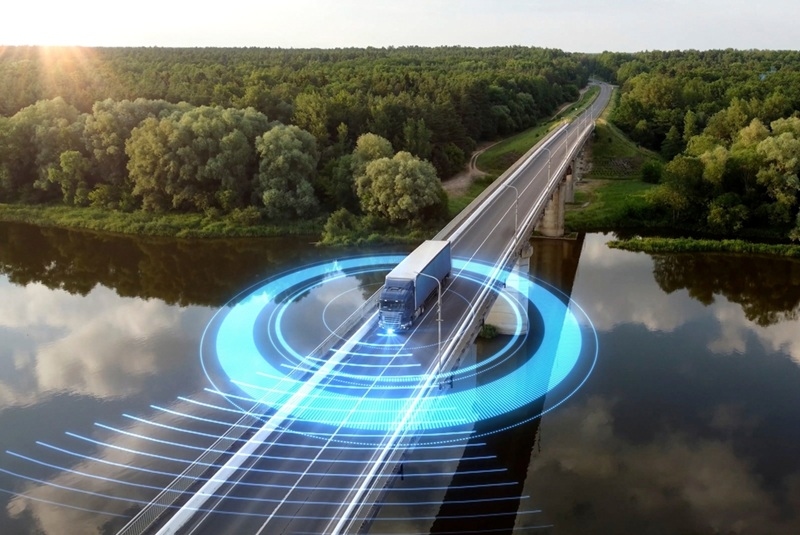
Just as self-driving vehicles are becoming more commonplace, self-serving technologies come with a set of ethical and legal possibilities – for one, liability. There is currently no legal taxonomy for attributing responsibility to a self-driving car. Along with legal coverage, the areas of privacy and social impact are urgent for machine-made decisions.
Main Issues Restraining Formal Policies Include:
- Who has to bear the financial repercussions in case of an accident with a self-driving car?
- What are the basic ethics of collecting data from the AI component of vehicles?
- Can manual control autonomous capabilities furnish the necessary deep safety validation and acceptance testing?
Numerous countries are designing systems to evaluate and control self-driven vehicles. As an example, the Department of Transportation in the US has put out AV 4.0 guidelines encouraging initiative on developing autonomous vehicles while maintaining security for citizens.
Other ethical issues arise as well such as how a self-driving automobile should behave when faced with unavoidable collision scenarios. Should efforts be made to protect those inside the car at the expense of those outside? These dilemmas show that the reality of self-driving technology exceeds the technological realm.
Impact on Employment and Skills in the Automotive Industry
The adoption of self-driving vehicles will impact employment in the automotive and transport sectors. Some people worry about the loss of traditional driving jobs while others expect a fundamentally different type of work will be needed.
Projected Changes to the Workforce Include:
- The need for software engineers, AI professionals, and robotics will increase.
- Certain segments of mechanical work will taper off or shift towards greater emphasis on electronics, software, and integration design.
- New positions in cybersecurity, data science, as well as in legal and compliance fields will be created.
Business and education are coming together to address the declining automotive industry trends in the automotive industry by upskilling workers. In order to effectively reduce the adverse consequences, retraining programs for the unemployed will be essential.
The Autonomous Vehicles Effect on Consumable Services
Autonomy is changing not just how cars are driven, but also how accessible auto mobility is thinking about transportation shifts.
Consumer Trends Influenced By Autonomous Vehicles:
An Increase in the Shared Economy: Subscription, on-demand rides that offer the ‘use without owning’ concept.
Focus on Comfort: Passengers are improving productivity or being entertained as vehicles drive themselves.
Familiarity with Technology: People are getting used to AI systems integrated into daily life.
Accessible self-driving cars will need consumers' trust through thorough testing and transparency, sparking new roads for companies to win over their consumers.
The Ecological Advantages Obtained From Self-Driving Cars
Autonomous cars have numerous benefits, however, one of the best features self-driving cars have is how it affects the environment. These cars have the advantage of operating with electric motors, significantly lowering carbon emissions.
Some of These Benefits Are:
- A reduction in fuel consumption due to the optimal driving speeds maintained by AI and efficient braking techniques.
- Artificial intelligence can maintain consistent speeds, thus decongesting traffic.
- Compared to individually owned vehicles, mobility models that allow for sharing reduce the number of cars on the roads.
Considering how important sustainability is to the automotive industry these days, utilising cars while focusing on caring for the environment and autonomy shows a lot of promise.
Here’s Something Helpful: How Self-Driving Cars Are Changing Road Safety Standards
The World Competition of Driverless Technology Dominance
The competition is on for the most advanced driverless technologies. Countries like China, South Korea, Germany, and the US are working tirelessly in all forms of infrastructure and policy to create a market away from this fulfilling technology.
Exciting Changes:
- Baidu's Apollo and Huawei's Autonomous Modules are propelling China forward.
- Engineering and automobile prowess are being augmented with the autonomy of more brands like Audi and BMW which makes Germany advanced.
- Silicon Valley and Detroit are the other most advanced areas of the US. The strive to advance driverless technologies is evergreen.
Newly provided government aid in the form of smart highways, tax breaks, and access to testing facilities will ensure a revolution in the automobile industry powered by IT facilities at the global level.
Conclusion
The era of self-driving cars has collapsed, but it’s revolutionizing the entire automobile industry. It is observable in leaps and bounds, from the AI integrated cars to the laws governing them and changing consumer behavior.
The stakeholders of the automotive industry like drivers, automakers, or even regulators who leap on these trends will propel the world towards a constructive paradigm shift towards safety, sustainability, and efficiency.
Autonomous driving is much more sophisticated than simply giving away control – it’s about redefining the essence of our mobility, living, and interactions in an intelligent world.
This content was created by AI